School Floor Sanding in London
School floors across London take a hammering. From the morning rush through corridors to chair movement in classrooms, assembly hall use and daily cleaning, timber surfaces can lose their protective lacquer long before the boards themselves are worn out. Once that seal breaks down, dirt works into the grain, moisture reaches the joints and previously sound flooring becomes harder to clean and potentially unsafe underfoot.
At Floor Sanding Services, we provide school floor sanding in London for educational buildings where durability, controlled dust and properly managed access matter just as much as the finished appearance. Our work covers worn floorboards, parquet blocks, timber sports floors and heavily trafficked teaching areas, with restoration methods selected around the building, its occupants and its operating timetable.
Whether your premises need School Floor Restoration in London, planned School Floor Maintenance in London or complete School Floor Refinishing in London, the starting point is a proper assessment of the existing timber. Sanding is not always the answer; where the original finish is still sound, a maintenance clean and compatible recoat may save considerable time and disruption.

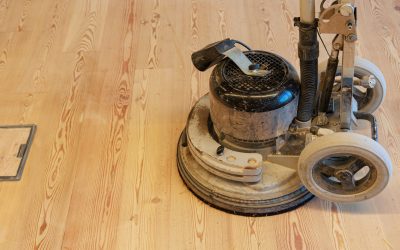
School classroom floor sanding and restoration in London. We transformed a heavily worn timber plank floor into a brighter, refreshed surface, bringing out the natural wood grain while preserving the character of the original floorboards. Professional floor sanding and finishing using trusted Bona, Lägler and Osmo products.
Why School Timber Floors Need Specialist Restoration
A school floor is not a domestic sitting-room floor. Hundreds of shoes carry grit through entrance halls, furniture is dragged between lessons, cleaning machines repeatedly dampen the surface and certain disinfectants gradually attack finishes that were never intended for institutional use.
We see these problems in Victorian school conversions around Islington and Camden, Edwardian institutional blocks in Hammersmith and Fulham, and older education buildings close to conservation areas in Kensington and Greenwich. Some retain narrow pitch-pine boards fixed over ventilated timber joists; others have quartersawn oak parquet or occasional teak flooring laid over solid substrates.
Each construction behaves differently. A flexible suspended floor may move seasonally, while a parquet installation bonded to concrete can fail through moisture migration or adhesive deterioration. Applying domestic polish or an unsuitable lacquer simply covers the warning signs without correcting the underlying defect.
Common Structural and Safety Problems
- Open joints and dirt traps: Gaps between boards and parquet blocks collect dust, food debris and cleaning residues, making routine hygiene work less effective.
- Worn slip-resistant surfaces: Polished traffic lanes, inappropriate cleaning products and contaminated finishes may increase slipping risks, particularly around entrances and wet-weather routes.
- Moisture ingress: Damaged seals allow repeated wet cleaning to affect timber joints, potentially causing swelling, raised edges and movement.
- Loose parquet blocks: Failed adhesive beds create hollow-sounding areas, unstable blocks and possible trip hazards.
- Splinters and exposed fixings: Splintered softwood, protruding nails and fractured board edges require proper repair before a floor can be returned to pupils.
- Incompatible coatings: Silicone polishes, wax residues and old maintenance products can interfere with lacquer adhesion, causing fisheyes, peeling or premature failure.
- Excessive previous sanding: Older tongue-and-groove boards and thin parquet may have limited remaining wear thickness and cannot safely be sanded indefinitely.
Slip resistance must be considered under the actual conditions of use, not judged by appearance alone. Where required, a competent specialist can assess the floor using pendulum slip-resistance testing under BS EN 16165:2021 Annex C, which superseded BS 7976-2. Both dry and wet conditions may need consideration, depending on the area and foreseeable contamination.
Floor Sanding for Schools, Colleges, Nurseries and Educational Campuses
Different education settings put different demands on their timber floors. A nursery playroom requires close attention to splinters, hygiene and cleaning compatibility; a secondary school corridor must cope with concentrated foot traffic; and a university teaching building may need restoration completed around lectures, examinations and public access.
Our school floor sanding and restoration service is suitable for:
- Nurseries, preschools, kindergartens, Montessori schools, childcare centres and daycare facilities.
- Primary schools, secondary schools, academies, state schools, independent and private schools.
- Boarding schools, international schools, specialist education settings and special educational needs facilities.
- Colleges, sixth-form colleges, vocational training centres, technical institutes and further education buildings.
- Universities, higher education institutions, adult learning centres and multi-building educational campuses.
- Tuition centres, tutoring academies, language schools, music schools, art schools and after-school clubs.
- School assembly halls, teaching studios, libraries, dining areas, timber corridors and suitable indoor sports facilities.
Special educational needs environments and early-years settings need particularly careful planning. Routes must remain accessible, equipment and chemical storage must be secured, and noise, odour, ventilation and occupancy arrangements should be agreed with the school before work begins.
Our Commercial School Floor Sanding and Restoration Process
The correct restoration specification depends on the timber, its fixing method, previous coatings and the time available before the building must reopen. We work through these points in order rather than assuming every floor needs the same sanding sequence and number of lacquer coats.
Step 1: Subfloor Audit and Moisture Testing
We begin with a physical inspection of the floor structure. This includes checking for loose boards, raised parquet, hollow areas, damaged expansion joints, exposed fixings, previous repairs and the remaining thickness available for sanding.
Species identification is equally important. Quartersawn oak, pitch pine and teak vary in hardness, resin or extractive content, grain behaviour and finishing requirements; the correct abrasive sequence and coating preparation must reflect those differences.
On concrete-backed floors, subfloor moisture is assessed using appropriate calibrated equipment and, where required, in-situ hygrometer relative-humidity checks. A surface moisture-meter reading alone does not establish whether concrete is suitable for re-bonding or installing timber flooring. On suspended floors, we also investigate ventilation, damp conditions and signs of moisture-related movement.
If the substrate is too damp or structurally unsound, we address the cause before recommending adhesive repairs or refinishing. Trapping moisture beneath a new coating or bonding parquet onto unsuitable concrete is a short route to another failure.
Step 2: Timber Repairs, Re-bonding and Resin Gap-Filling
Loose parquet blocks are lifted where necessary, the failed adhesive is removed and the substrate is prepared for re-bonding. Depending on the timber, substrate and manufacturer’s specification, a compatible silane-based flexible parquet adhesive may be selected to accommodate normal movement without relying on a brittle bond.
Broken boards are repaired or replaced with timber matched as closely as practical in species, dimensions and grain. In older London school buildings, reclaimed pitch pine or matching oak can be preferable to inserting visually and mechanically unsuitable modern softwood.
Small, stable gaps may be treated using a resin-slurry gap-filling system, incorporating suitable fine sanding dust and a compatible binder. Wider gaps and moving joints may require timber slivers, specialist flexible fillers or deliberate retention of movement space; rigid filler is not a permanent solution for a floor that moves every winter.
We also check perimeter movement allowances and threshold transitions. These details often determine whether a restored school floor remains serviceable after another heating season.
Step 3: HEPA Dust-Controlled Sanding and Surface Preparation
For larger timber areas, a Lägler Hummel belt sander is an established trade machine for controlled, progressive sanding. Edging machines, smaller orbitals and multi-disc finishing equipment are used where appropriate to deal with perimeter details, corners and final scratch refinement.
We select abrasive grades to suit the existing coating and timber rather than cutting aggressively from the outset. A typical programme may progress from coarse stripping through intermediate abrasives to a suitable final finish, but thin parquet, resinous pine and heavily coated flooring can require a different approach.
Dust control is organised at source using properly matched extraction equipment. Where specified, suitable extractors incorporating HEPA H14 filtration can be used as part of the control system, with sealed work areas, appropriate H- or M-class extraction equipment, suitable respiratory protection and careful final vacuuming. H14 filtration by itself does not guarantee that a complete extraction machine satisfies the required dust-class specification.
Wood dust is hazardous, so our proposed controls must follow a project-specific COSHH assessment and risk assessment. We refer to the HSE guidance on cutting and sanding wood when establishing dust-control requirements.
Before finishing, the timber is inspected for swirl marks, cross-grain scratches, residual contamination and areas of uneven absorption. Rushing this stage shows up immediately when the first coat is applied, particularly under the long windows and strong daylight found in older school assembly halls.

Step 4: High-Traffic Finishes, 2K Lacquers and Slip-Resistance Options
For many London classroom floors, corridors and assembly halls, a commercial-grade two-component (2K) waterborne polyurethane lacquer offers a practical balance of abrasion resistance, cleanability and appearance. Its separate cross-linking catalyst or hardener must be mixed at the correct ratio, with the manufacturer’s pot life, application weight and recoat window observed.
Two-component products are not all chemically identical. Their safety data sheets, hardener composition, ventilation requirements and application restrictions must be checked under COSHH before work begins, especially in nurseries and occupied educational buildings.
Where indoor-air-quality requirements are particularly sensitive, we can assess products carrying recognised low-emission credentials, including EMICODE EC1 Plus where the selected product is certified. Low VOC content or low emissions should not be confused with zero exposure or permission for immediate reoccupation.
Hardwax oils remain an option for suitable timber floors where localised repairability and a natural appearance are priorities. They are not automatically the best finish for high-use school corridors, and their maintenance requirements should be understood before specification.
Where the floor has a particular slipping risk, an appropriate anti-slip lacquer or compatible slip-resistant system may be considered. Coating choice should be supported by product information and, where specified, completed-floor pendulum testing rather than relying on labels such as ‘non-slip’ or assuming a matt surface is safe.
Dedicated sports floors need separate attention to the applicable performance specification, including sporting traction, line markings and compatibility with the relevant standards such as BS EN 14904. An ordinary classroom lacquer should not be substituted for a specified sports-floor finish.
Step 5: Aftercare and Planned School Floor Maintenance
Good restoration can be undone quickly by the wrong cleaning regime. Strong alkaline products, excessive water, steam cleaners and incompatible polish treatments can all shorten the life of a commercial wood-floor finish.
Once work is complete, the school should receive a practical maintenance schedule covering suitable neutral cleaning products, mop moisture control, entrance matting, furniture feet protection and routine inspections of heavily trafficked areas.
We recommend assessing corridors, entrances and assembly spaces at intervals appropriate to their usage. A compatible maintenance coat applied before the timber is exposed can often avoid the disruption and expense of a complete sanding programme.
School Floor Sanding During Holidays, Weekends and Out-of-Hours
The main challenge on a school contract is often access rather than sanding. Fire escape routes cannot simply be blocked, cleaning teams need agreed handover times, safeguarding arrangements must be respected and a building may have to reopen for breakfast clubs, evening classes or examination sessions.
We plan the proposed working sequence around room availability, machinery access, loading restrictions, ventilation, drying conditions and the actual finish-curing programme. Holiday shutdowns are often ideal, but smaller phased works may also be possible where the site layout allows safe separation.
| Working Shift | Operational Benefits | Facility Suitability |
|---|---|---|
| Overnight | Reduces disruption to scheduled lessons. Suitable for preparatory work and phased operations where noise, access and cure periods permit. | University teaching spaces, selected corridors, college premises and educational buildings with managed evening access. |
| Weekend Phased | Provides a longer uninterrupted work window, allowing restoration stages to be programmed without normal weekday pupil traffic. | Primary and secondary schools, academies, sixth-form colleges and teaching blocks with weekend closure. |
| Sectional | Allows work zones to be isolated while other parts of the premises remain operational, subject to safe routes and curing requirements. | Large campuses, universities, multi-wing schools, training centres and buildings with alternative circulation routes. |

School sports hall floor sanding and restoration in London. We refreshed the worn solid wood sports flooring, bringing back its natural colour, smooth finish and shine while showcasing the court markings. Professional floor sanding and finishing for educational and commercial spaces, using trusted Bona, Lägler and Osmo products.
When Can Pupils and Staff Walk on the Floor Again?
Drying and full chemical curing are different stages. Some waterborne lacquer systems permit carefully controlled light foot traffic within approximately 12–24 hours after the final coat under suitable conditions, but furniture movement, heavy use, wet cleaning and full loading may require several days or longer.
Actual times depend on the product, coat thickness, temperature, relative humidity and ventilation. We follow the selected manufacturer’s technical data sheet and agree a written reoccupation and handover plan; overnight application does not automatically mean a classroom is fit for full use the following morning.
Particular care is needed in enclosed corridors and older buildings with limited airflow. Temporary ventilation arrangements must not compromise security, fire precautions or safeguarding.
Restoring Timber Floors in London’s Older School Buildings
London’s education estate contains a wide range of timber-floor constructions, and age alone tells you very little about the condition beneath the lacquer. A late-Victorian primary school near Upper Street may have pine boards over a ventilated void, while an Edwardian hall near Hammersmith Broadway may retain hardwood blocks fixed with ageing adhesive.
In Fulham and Kensington, older converted buildings often have awkward stair access, restricted loading areas and original skirting or joinery that must remain undamaged. Around Westminster, Camden and conservation-sensitive streets close to Greenwich Park, original floor patterns and historic material may also warrant a more restrained repair specification.
Where buildings are listed or subject to particular conservation controls, intrusive alterations must be checked against the relevant permissions before proceeding. Our preference is to preserve sound original timber wherever practical, rather than remove it simply because a replacement floor would be easier to price.
Delivery parking, controlled access, equipment movement through teaching areas and noise-sensitive neighbours all need consideration. These are everyday site-management issues on London school projects, and they belong in the programme before machinery arrives.
Health, Safety and Safeguarding on Educational Sites
School floor restoration requires more than a tidy sanding team. Before work begins, the project should have suitable Risk Assessments and Method Statements (RAMS), COSHH assessments, an agreed work-zone boundary and clear arrangements for site access, emergency procedures and waste removal.
We assess the need for CSCS-carded personnel according to the site and contractor requirements, with relevant training and competency evidence checked before mobilisation. Contractor public liability and employers’ liability insurance details should also be available for the school’s procurement and facilities team to verify before appointment.
Where children or vulnerable learners remain on site, safeguarding arrangements must be agreed with the designated safeguarding lead or responsible site representative. DBS eligibility, supervision and access controls are determined by the nature of the work and the school’s requirements; a construction access card does not replace safeguarding checks.
Older floor coatings, mastics and surrounding construction materials must be assessed before disturbance. If suspect asbestos-containing material is identified, work affecting it must stop until the material has been assessed and appropriate arrangements made.
Waste coatings, adhesives, contaminated abrasives and collected wood dust are handled in accordance with the applicable assessment and disposal requirements. Work areas are checked and cleaned before handover, with any outstanding curing or access restrictions recorded.
School Floor Sanding Prices and Previous Restoration Work
Commercial school floor sanding prices depend on more than square metres. The flooring species, previous coatings, repair quantities, access restrictions, additional finishing coats and the need for evening or weekend attendance can substantially change the labour and materials required.
Our floor sanding prices page gives an indication of standard sanding, lacquering, staining and gap-filling rates. These are guide prices rather than a fixed school-contract tariff, particularly where specialist repairs, sports-floor specifications or phased attendance are required.
You can also visit our wood floor sanding gallery for the site’s restoration portfolio. When discussing your school project, ask for examples relevant to your floor type, such as parquet, original floorboards or large timber halls.
What Goes Into a School Floor Restoration Quotation?
We can begin with site photographs, a short walkthrough video, approximate floor dimensions and your preferred shutdown dates. These help establish the likely scope, but a physical survey is recommended before a firm commercial specification is agreed.
A properly itemised proposal should identify preparation, timber repairs, sanding, gap filling, coating products, the number of coats, access arrangements, exclusions and the required curing period. Where hidden damage or substrate defects cannot be confirmed until inspection or opening-up, that uncertainty should be stated rather than concealed in a fixed price.
A Practical Approach to School Floor Restoration
We believe a school should be able to compare contractors on clear technical information, not sales claims. The finish system should be named, the proposed repairs should be explained and the timetable must make sense against the building’s daily use.
- Trade-specific equipment: Professional belt sanding, edging and finishing machinery selected for the floor construction.
- Dust-control planning: Appropriate extraction, containment, cleaning and respiratory protection measures.
- Timber-focused repairs: Assessment of board movement, parquet adhesion, damaged joints and remaining wear thickness.
- Commercial coatings: Fit-for-purpose lacquer, oil or specialist finish recommendations based on use and maintenance requirements.
- Site documentation: RAMS, COSHH information and competency or insurance documentation for review as required.
- Transparent estimating: Initial photo or video assessment followed by a physical survey and written scope where appropriate.
- Managed handover: Agreed access restrictions, curing instructions and practical maintenance recommendations.
From a single nursery activity room to a large academy assembly hall, the objective is the same: retain as much sound timber as possible, repair defects properly and return a cleanable, serviceable surface under an agreed programme.
Frequently Asked Questions About School Floor Sanding in London
Can school floors be sanded during the summer holidays?
Yes. Summer closures and half-term breaks are often the most practical periods for larger restoration projects, particularly when several coats of lacquer and substantial parquet repairs are required. Early planning helps secure adequate time for preparation, finishing and curing before reopening.
Can you restore a school floor without replacing the original boards?
In many cases, yes. Sound pitch pine, oak parquet and other established timber floors can often be repaired and refinished, provided sufficient sanding thickness remains and the underlying structure is suitable. Extensive rot, failed substrates or severely depleted wear layers may require more substantial intervention.
Is dust-controlled sanding safe for occupied schools?
Effective dust extraction and containment reduce exposure, but no sanding operation should be described as completely dust-free. Occupancy must be managed through risk assessment, work-zone separation and suitable controls, with children kept away from the affected areas.
Which finish is best for school corridors and classrooms?
Commercial-grade 2K waterborne polyurethane lacquer is often a sensible option because of its abrasion resistance and maintenance characteristics. The final choice depends on the substrate, expected traffic, cleaning routine, slip-resistance requirements and the time available for curing.
How often should school timber floors be refinished?
There is no reliable fixed interval for every building. A busy entrance corridor may need attention considerably sooner than a lightly used teaching room; periodic inspections and timely maintenance recoating are more useful than waiting until bare timber appears.
Can individual classrooms be restored while the rest of the school operates?
Potentially, where access, noise, ventilation and safeguarding arrangements permit proper isolation. The phased programme must maintain suitable escape routes and prevent premature traffic across freshly finished sections.